Welcome to the newest of the Holden Arboretum’s garden areas! The Core Natural Areas are relatively unmanaged forest fragments within the maintained garden area, and we currently are focusing on 5 of them for restoration. They range in size from 0.5 acre to 2 acres and are currently being aggressively managed for invasive species. Once these woody invasives are largely eradicated, Eastern North American native food plants will be planted. These sites will function as food forests, which could become the basis for a sustainable food system.
A new, rough-and-ready trail was created around Site 2, which is located between the ticket booth, the Butterfly Garden, and the Crabapple Collection. We’ll start right off the pathway that runs along the far Eastern edge of the Butterfly Garden. It’s marked by Bald Cypresses and Dawn Redwoods. Just beyond them, you’re in another world.
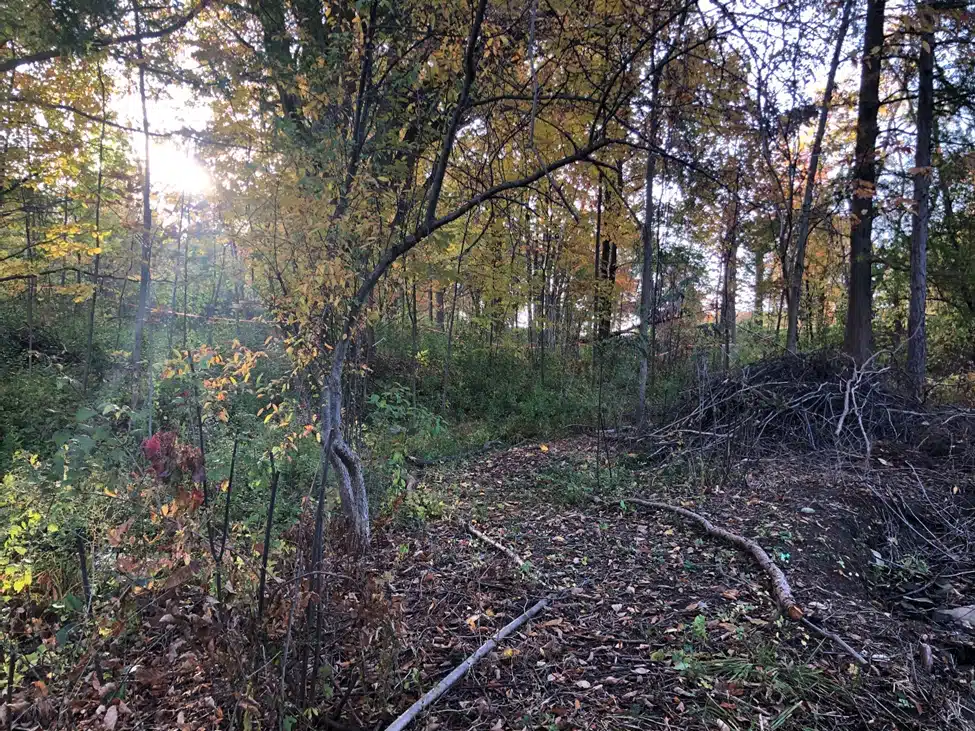
Cut branches comprise a debris pile and are also used to line the path.
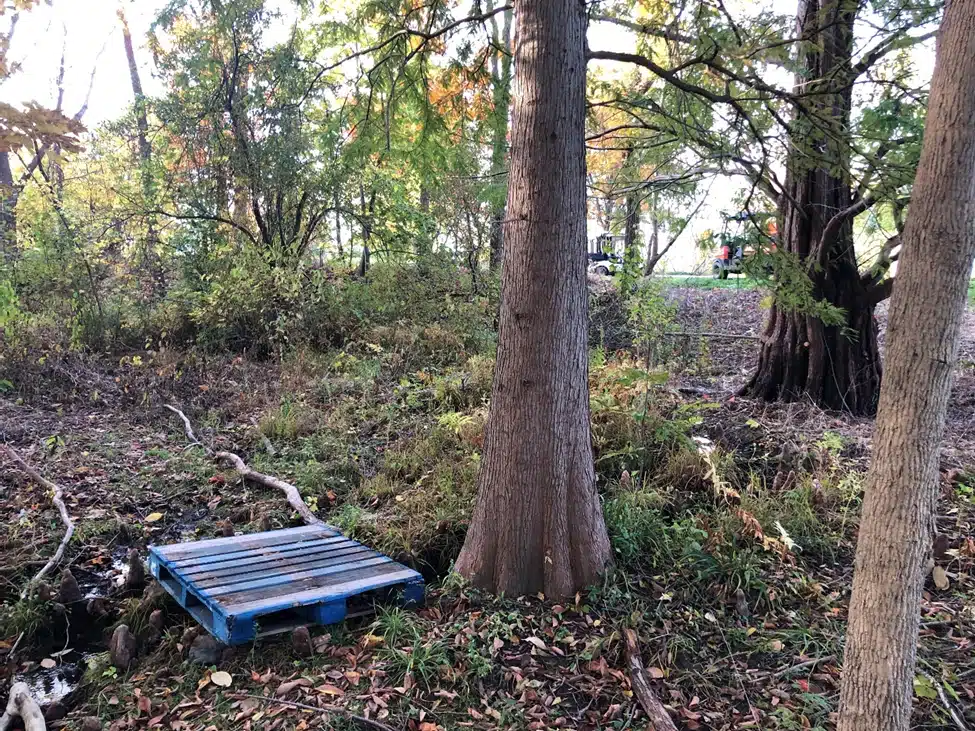
Volunteer Bob Agrast had the idea to use shipping pallets as bridges. If the trail becomes ADA accessible, a more permanent solution will be found.
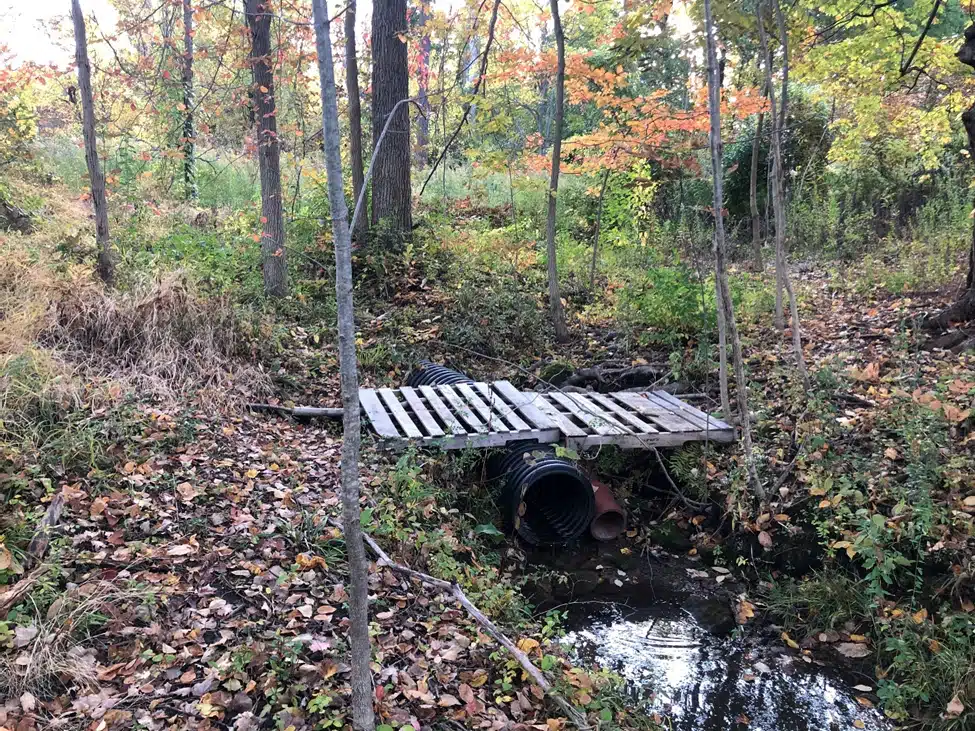
Two pallets reinforced with ash sapling poles ford an otherwise unattractive drain pipe.
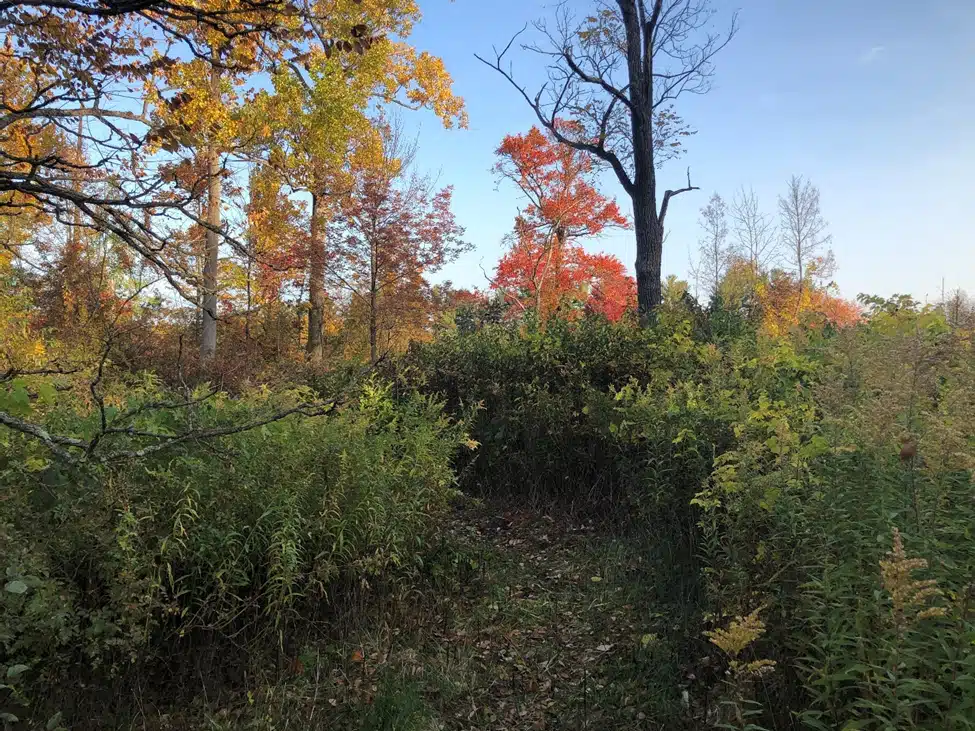
At un-mowed Old Sperry Road—which separates Site 2 from Site 1—looping back into Site 2.
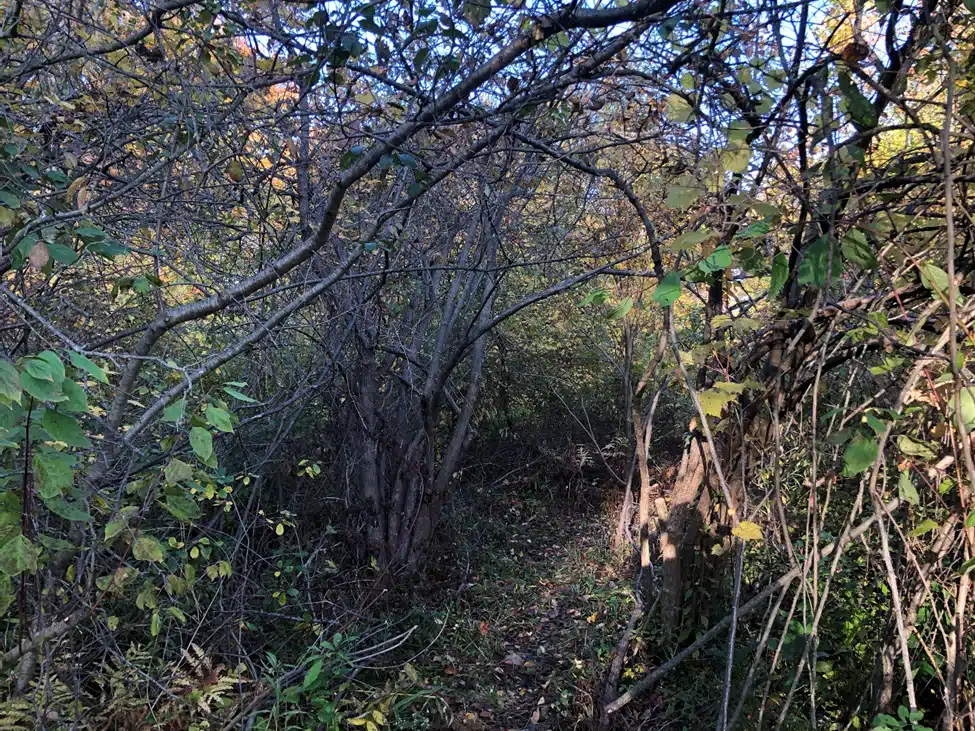
Arches of Crabapple, Viburnum, and the occasional Buckthorn create a tunnel effect.
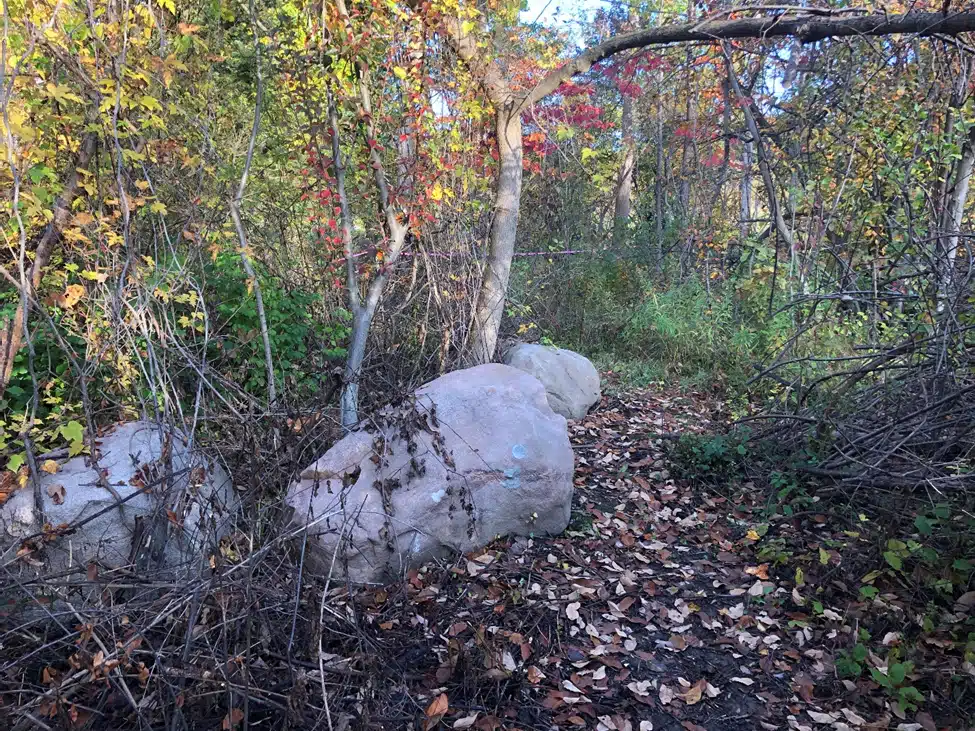
Beautiful lichen-encrusted boulders offer seating and contemplation potential.
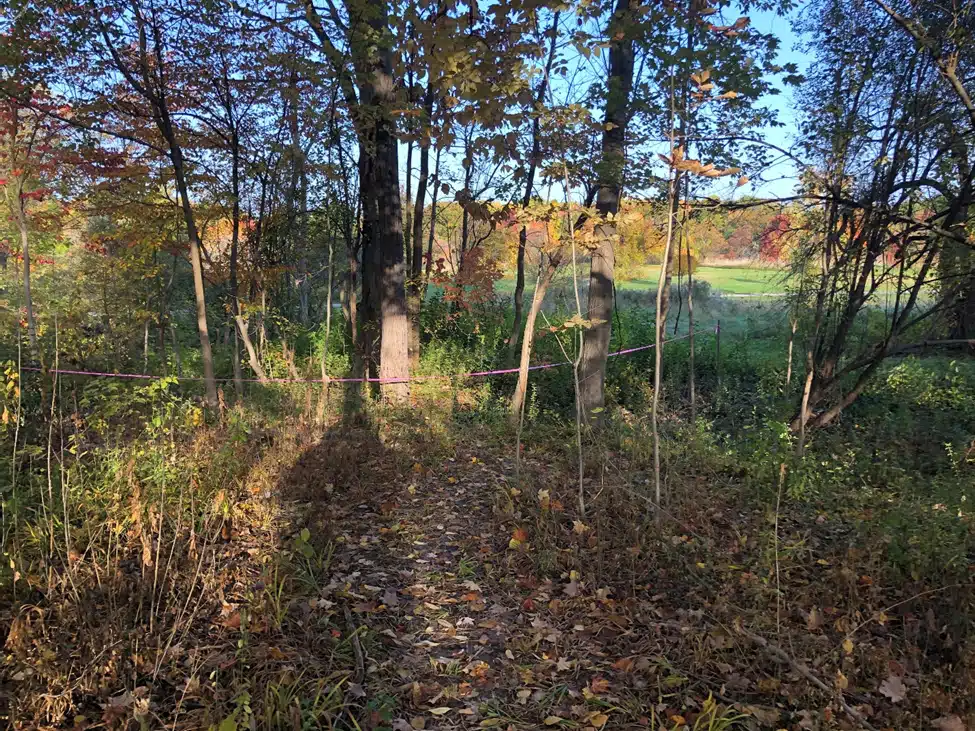
Pink flagging tape separates the sites into 3 sections, with each section representing a different broadcast spray treatment. Woody invasives cut from the previous winter are now 2-4 feet tall, and broadcast sprays occur when invasive leaves remain after native leaves have already dropped. Crabapple collection is in the background.
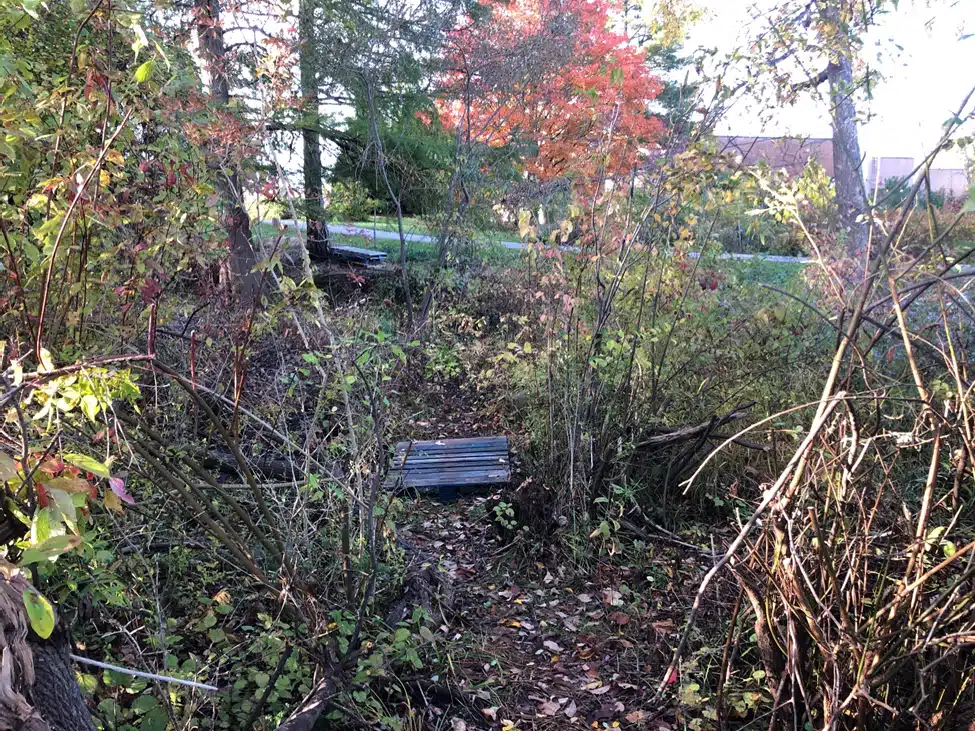
A final pallet takes you back to the Eastern end of the Butterfly Garden and the Visitor’s Center.
Here’s more to explore

November 1, 2021
When to Plant a Tree
Certain types of trees are generally recommended to be planted in spring and not in fall, especially after early October. If a tree was dug in late summer, or planted...
Read more
January 20, 2021
Why Leaves Change Color
This is an age old question that many teachers are asked, and it can be a starting point of a number of important lessons. The beautiful leaves of fall are...
Read more
October 1, 2026
New Study Provides Hope for Resistance to Beech Leaf Disease
Kirtland, Ohio — A new study led by scientists at the Holden Arboretum has found evidence that beech leaf disease (BLD) symptom development is genetically controlled, providing the first evidence...
Read more
September 21, 2026
We’re on PBS! Learn more about Holden’s people and places seen on “By Nature’s Design”
The experts and forests of Holden Forests & Gardens appeared on the PBS Western Reserve’s docuseries, “BY NATURE’S DESIGN,” which premiered this weekend. Season 2, “Inside the Forests,” showcases a...
Read more
April 20, 2026
Ways to Love a Forest: Stories of Woodland Stewardship in Northeast Ohio
A logger had been coming by Joe and Christel Diliberto’s Portage County home for years, offering his services. So when they wanted a few trees removed — and he said...
Read more
January 6, 2026
Life in the Winter Forest
Take a stroll through the forest at the Holden Arboretum on a cold winter’s morning — the trails are open year-round — and the quiet stillness might trick you into...
Read more
December 19, 2025
New Study Reveals How Beech Leaf Disease Disrupts the Forest Ecosystem
As beech leaf disease continues to sweep across our region, the longer-term effects of the disease are starting to reveal themselves in the epicenter — right here in Lake County....
Read more
November 20, 2025
Know the Forest Pests That Live in Your Area: Holden Researchers Get the Word Out
Do you know what the symptoms of beech leaf disease look like? What about hemlock woolly adelgid — can you tell it from elongate hemlock scale, and did you know...
Read more
November 11, 2025
What’s That Thing on the Emergent Tower? HF&G Tests New Forest Pest Monitoring Tool
If you’ve been to the Kalberer Emergent Tower at the Holden Arboretum lately — let’s be honest, who hasn’t (#fall) — you may have noticed something new: A pale purple...
Read more