When you visit Tropical Holiday presented by JPMorganChase this winter, you’ll step into a lush plantscape filled with palms, bromeliads, anthuriums, ferns, tropical foliage and holiday favorites like poinsettias. But creating that tropical atmosphere starts long before the first plant is placed.
Our horticulture team spends months selecting plants that bring together the right combination of color, texture, scale and tropical character. Some are chosen for their bold foliage, others for their color, and many help tell the story of tropical ecosystems. Together, they create the layered, vibrant experience that makes Tropical Holiday feel like an island escape in the middle of winter.
Many of the plants featured throughout the exhibit can also be grown at home. Here are a few to look for during your visit and the reasons we love them.
Anthurium
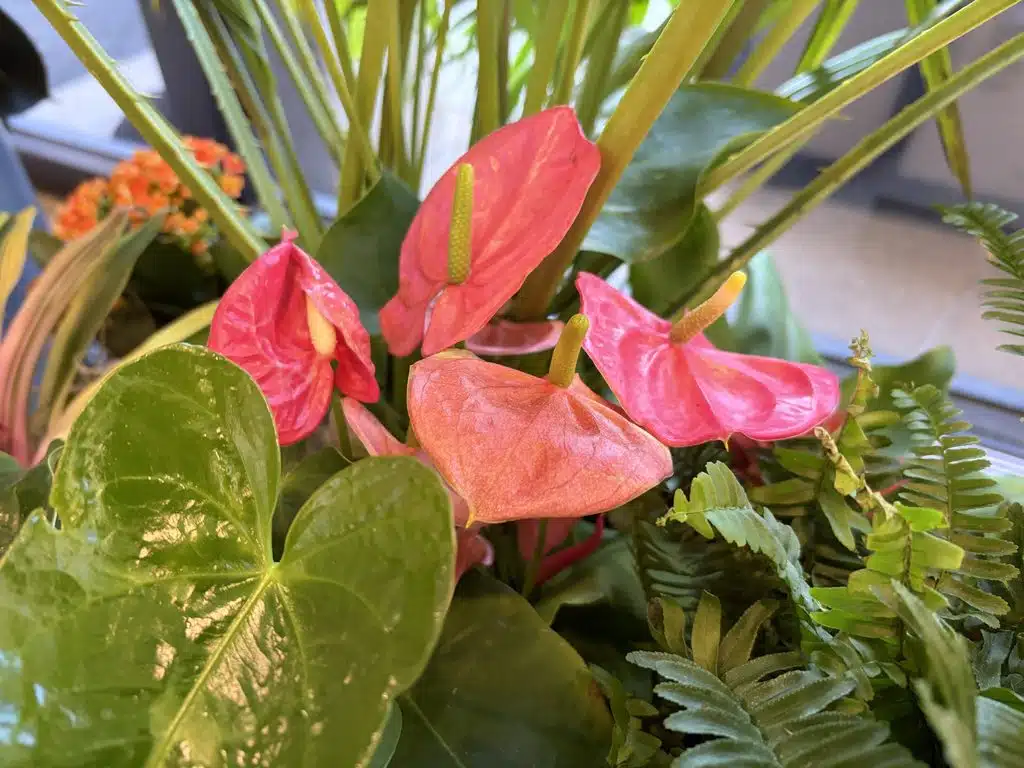
Looking for a long-lasting alternative to traditional holiday flowers? Anthuriums are a beautiful option.
Native to Central and South America, the Caribbean and Mexico, anthuriums are known for their striking heart-shaped “flowers.” What looks like a flower is actually a spathe, a modified leaf surrounding a central spadix. The tiny true flowers are found along that central spike.
With the right care, anthuriums can produce colorful displays for months. They enjoy warmth, humidity and bright, indirect light, making them well suited to tropical environments and sunny spots inside your home.
At Cleveland Botanical Garden, we love pairing anthuriums with bromeliads. Their glossy foliage and colorful spathes provide a beautiful contrast to the architectural forms of bromeliads.
At home: Keep anthuriums in bright, indirect light and allow the potting mix to dry slightly between waterings. Keep them away from curious pets and children, as they are toxic if eaten and their sap can irritate the skin.
Bromeliads
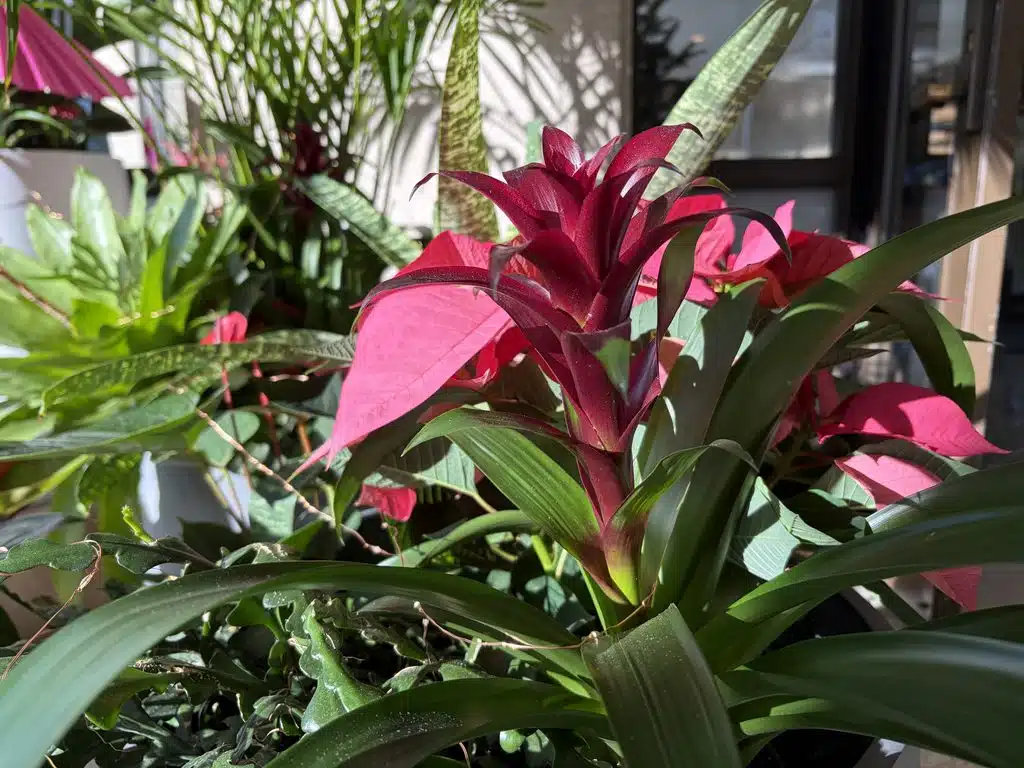
You may already have a bromeliad sitting in your fruit basket without realizing it. Pineapple plants are members of the bromeliad family, Bromeliaceae.
With more than 3,000 species, bromeliads come in an incredible range of shapes, colors and sizes. Most are native to tropical regions of the Americas, and many have stiff, sword-shaped leaves arranged in a spiral rosette.
That rosette isn’t just beautiful. Many bromeliads form a small reservoir of water at their center, creating a miniature ecosystem that provides water and habitat for insects and other small organisms.
This relationship is especially fascinating in our Costa Rica Glasshouse, where bromeliads provide important habitat for dart frogs.
Look up at the living tree in Tropical Holiday and you’ll see bromeliads incorporated throughout the structure in a variety of forms and colors. Their ability to grow in and around other plants helps create the layered appearance we associate with tropical forests.
At home: Bromeliads are generally easy-care houseplants. Give them bright, indirect light, good air circulation and appropriate moisture. Many varieties tolerate periods of drying between waterings. If a plant appears to decline, don’t give up too quickly. New “pups” often emerge from the base and can begin the growing process all over again.
Norfolk Island Pine (Araucaria heterophylla)
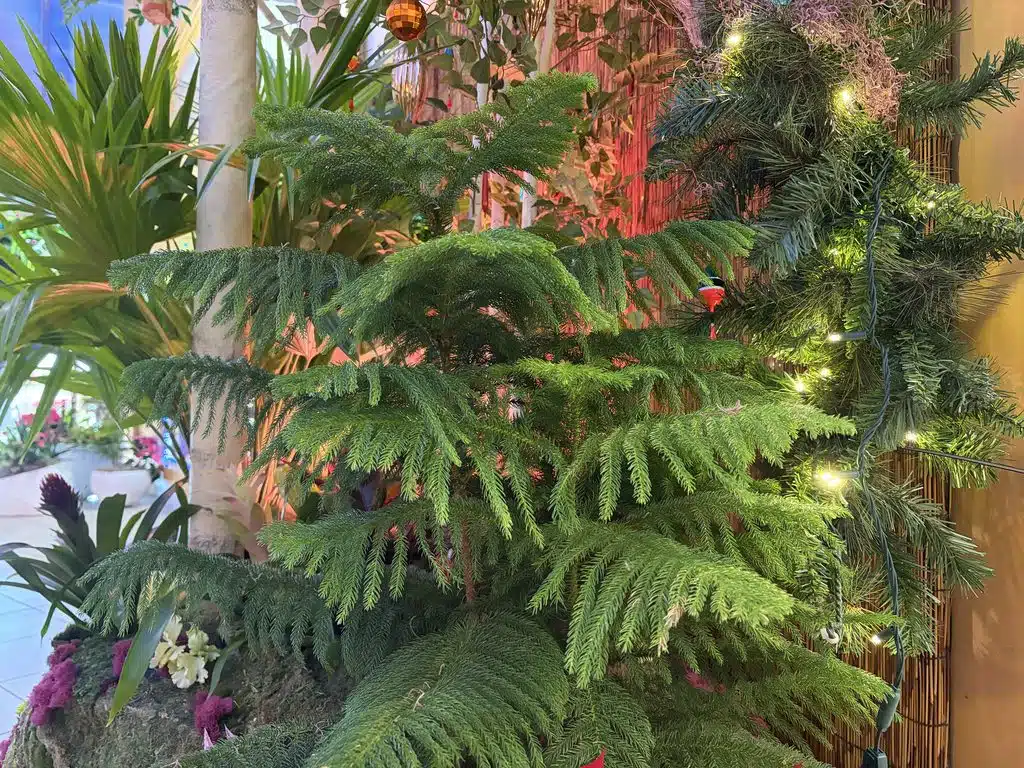
Norfolk Island pines are a holiday favorite, but despite their name and appearance, they aren’t true pines.
Native to Norfolk Island between Australia and New Zealand, these evergreen trees have soft, symmetrical branches that give them a classic Christmas tree shape. In Northeast Ohio, they’re commonly grown as houseplants and are especially popular as living holiday trees.
They’re also well suited to smaller spaces thanks to their naturally narrow, upright form.
One thing to remember: they can grow. With good care, a Norfolk Island pine can eventually become much larger than the tabletop tree you brought home for the holidays. Give it bright light and room to grow, and it can become a long-term houseplant for years to come.
Christmas Cactus (Schlumbergera)
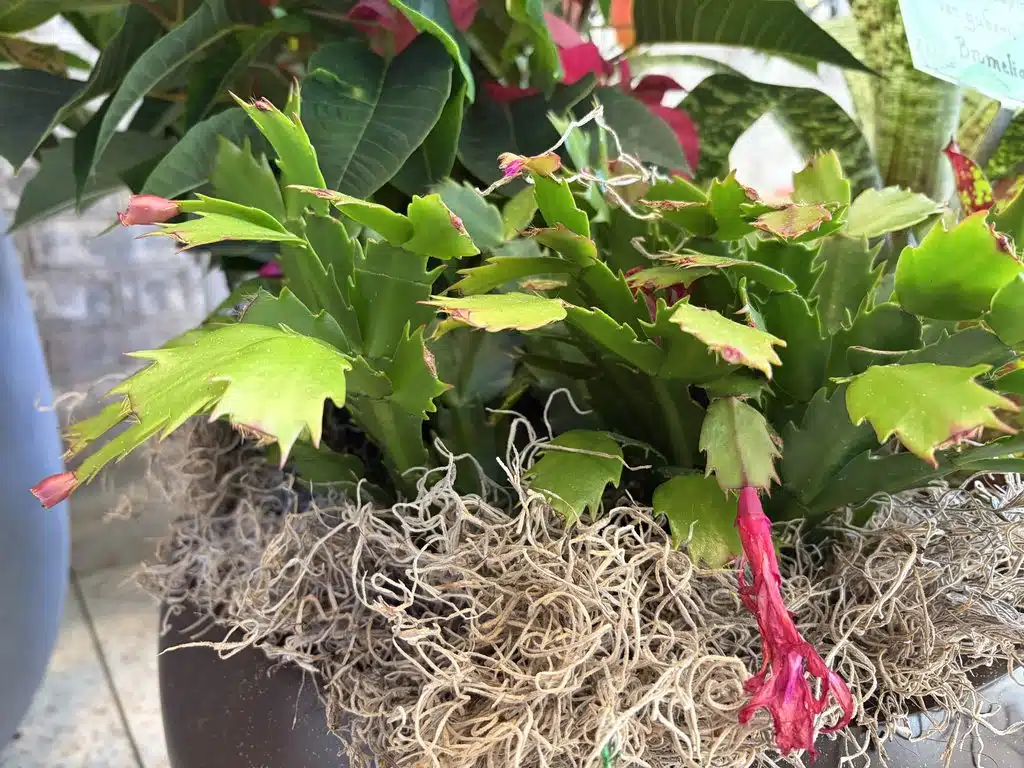
Despite its common name, Christmas cactus is a tropical plant, not a desert cactus.
Native to Brazil, Christmas cactus grows naturally in forest environments and has very different needs from the desert cacti many people picture when they hear the word “cactus.” These plants appreciate humidity, cooler temperatures and bright, indirect light.
They’re especially loved for their colorful winter flowers.
Christmas cactus is also a fascinating example of how environmental conditions influence flowering. Shorter days and longer periods of darkness help initiate blooming. In cultivation, providing a long, uninterrupted period of darkness can encourage blooms around the holidays.
At home: Give Christmas cactus bright, indirect light, moderate watering and good drainage. Once buds begin forming, try not to move the plant or dramatically change its conditions. It prefers consistency while flowering.
Bring a Tropical Holiday Home
As you explore Tropical Holiday, take a closer look at how these plants are combined throughout the exhibit. Notice the contrast between large leaves and fine foliage, upright forms and spreading shapes, colorful blooms and patterned leaves.
These combinations are intentional and help showcase the remarkable diversity, beauty and value of tropical plants. And with plants like anthuriums, bromeliads, Norfolk Island pines and Christmas cactus readily available as houseplants, you can bring a little Tropical Holiday inspiration into your own home long after your visit ends.
Here’s more to explore

July 20, 2026
Award-Winning Research Reveals How Wildflowers May Struggle Under Climate Change
In Ohio, we think of fall as the end of the growing season. But for many California wildflowers, fall is a beginning. From the deserts of Southern California to the...
Read more
May 29, 2026
It’s Poppin’: May 29
We’ve almost made it to June, and there is a lot going on in the gardens this time of year. At the arboretum, rhododendrons are still blooming throughout the Helen...
Read more
May 15, 2026
It’s Poppin’: May 15
This cool weather has really kept things poppin’ in the gardens. Although we lament it by this time of year, cool springs make for longer blooming seasons. We have a suite...
Read more
May 11, 2026
What Rhododendrons Know About Their Environment
As our world begins to warm, scientists are looking for early detection systems that will tell us what’s already being affected and help us predict what’s to come. Plants have...
Read more
May 4, 2026
How Much Sun Is Too Much Sun?
Have you ever noticed a plant whose leaves were turning red or purple, especially in a particularly sunny spot? The plant may be making the red pigment you see to...
Read more
May 1, 2026
It’s Poppin’: May 1
It’s May, and it’s definitely Poppin’! The exceptionally warm March we experienced this year has resulted in earlier bloom times than usual for many plants in our collections, including rhododendrons....
Read more
April 23, 2026
It’s Poppin’: April 23
It’s Poppin’ out there! The warm weather we have been having the past couple of weeks (minus the two nights where we hovered around freezing) have caused the gardens to...
Read more
April 10, 2026
It’s Poppin’ April 10
Welcome to It’s Poppin’ 2026! Check in every week to discover the seasonal highlights in our living collections selected by curatorial staff at the Holden Arboretum and Cleveland Botanical Garden. We’ll...
Read more
March 6, 2026
How To Hand-Pollinate Vanilla
One of my favorite plants is the vanilla orchid and I am lucky to have a mature vanilla orchid in the Madagascar biome that flowers fairly regularly. When the vanilla...
Read more