As a scientist at the Holden Arboretum, I wear many hats, but one of my favorites is mentor to our summer interns. Each year, Holden’s Research Department brings in students from around the country to join us in our labs, gardens, and forests. These students help us collect valuable data used to make new discoveries about the role of plants in our natural world, and in turn, get to try their hand at being a scientist. Many of them will go on to become scientists themselves.
This year, like so many other aspects of life, these internships looks a lot different. We’re doing more work outside. We’re maintaining 6 feet of distance. We’re not handing each others equipment. When we all meet as a group to discuss careers or scientific ideas, we do it over Zoom. But the spirit of the program remains the same. We’re still sharing our love of science with the next generation of scientists. We’re still advancing our understanding of plants and our natural world. We’re still working together to push the field of plant science forward.
This year we have eight amazing interns working across four labs in Holden’s Research Department. These students have been with us since early May, working on a diverse range of projects, from explorations of the complex interactions between pollinators and the floral microbiome in crabapple, to the impacts of the urban environment on forest trees. In their work, these students have gained new skills, both tangible, and more nebulous. Some have learned to identify plants in our forests, others have learned how to carefully extract DNA from soil samples. Like the rest of us, they’re also learning how to be resilient – adapting to a barrage of new protocols designed to promote safety in an environment that sometimes feels less than ideal for learning. But this year, perhaps more than ever, there seems to be unique value in the chance to work and learn at an organization that seeks to explore the importance of our natural world and to connect people with nature.
f you are curious to learn more about what these interns have been up to this summer, what they’ve learned, and where they’re heading next, watch this space. We’ll be posting brief bios of our interns and their summer research here in the coming week. We hope you’ll be as inspired as we are.
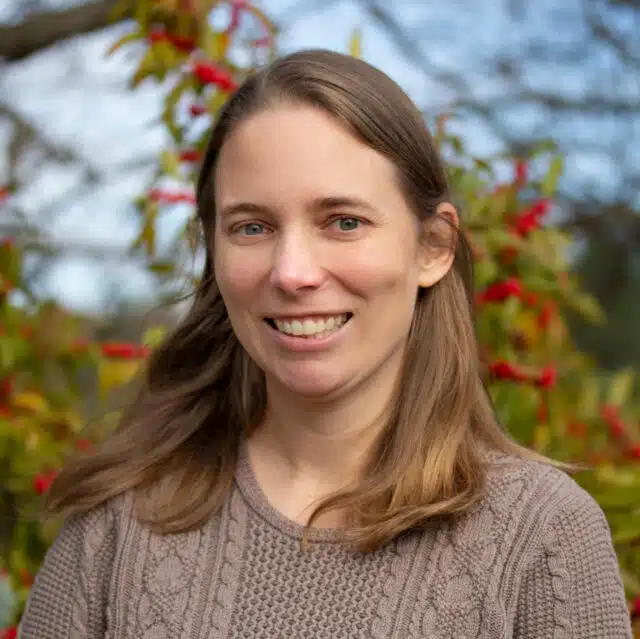
Katie Stuble, PhD
Director of Research
I am a community ecologist interested in the mechanisms responsible for maintaining patterns of biodiversity, and understanding how global change will likely alter communities. My research focuses on two important drivers of global change: invasive species and global climate change. Much of my research centers around how global change affects interactions among species, ultimately shaping the structure and function of ecosystems. In particular, current research projects examine: 1) community assembly, and how dynamics between species during the early stages of community development are impacted by climate and ultimately influence the composition of emerging communities, 2) ant-mediated seed dispersal and the impacts of both non-native ants and climate change, and 3) the effects of changing community composition (both above and below-ground) on ecosystem functions such as carbon cycling.
Here’s more to explore

October 1, 2026
New Study Provides Hope for Resistance to Beech Leaf Disease
Kirtland, Ohio — A new study led by scientists at the Holden Arboretum has found evidence that beech leaf disease (BLD) symptom development is genetically controlled, providing the first evidence...
Read more
September 4, 2026
New Species of Diatom Discovered in Stebbins Gulch
Walking along a rocky creek at the bottom of a steep, shady canyon, ancient trees towering overhead, a surprising coolness on the breeze — a traveler might feel like they’re...
Read more
July 30, 2026
Meet Carlo Moreno, Holden’s Newest Scientist
In Akron, Ohio, a community garden called Akron Cooperative Farms sits on land that was once used as baseball fields. Many of the gardeners there are immigrants and refugees from...
Read more
July 20, 2026
Award-Winning Research Reveals How Wildflowers May Struggle Under Climate Change
In Ohio, we think of fall as the end of the growing season. But for many California wildflowers, fall is a beginning. From the deserts of Southern California to the...
Read more
June 3, 2026
New Study Tracks Long-Term Results of Forest Fungi Restoration Experiment
Few places are as intensively landscaped as golf courses. They’re mowed and manicured, they’re fertilized and kept chemically weed-free, and they’re tromped on half the year by golfers, carts, and...
Read more
May 4, 2026
How Much Sun Is Too Much Sun?
Have you ever noticed a plant whose leaves were turning red or purple, especially in a particularly sunny spot? The plant may be making the red pigment you see to...
Read more
January 6, 2026
Life in the Winter Forest
Take a stroll through the forest at the Holden Arboretum on a cold winter’s morning — the trails are open year-round — and the quiet stillness might trick you into...
Read more
December 19, 2025
New Study Reveals How Beech Leaf Disease Disrupts the Forest Ecosystem
As beech leaf disease continues to sweep across our region, the longer-term effects of the disease are starting to reveal themselves in the epicenter — right here in Lake County....
Read more
November 11, 2025
What’s That Thing on the Emergent Tower? HF&G Tests New Forest Pest Monitoring Tool
If you’ve been to the Kalberer Emergent Tower at the Holden Arboretum lately — let’s be honest, who hasn’t (#fall) — you may have noticed something new: A pale purple...
Read more