In 2006, The North American Nature Photography Association (NANPA) designated June 15 as Nature Photography Day – a day to enjoy capturing the beauty of nature through photography and to learn more about preservation and conservation along the way. I may be a few days late for the actual date, but since nature photography is one of my favorite hobbies, I thought I’d share a few recent photos in honor of this day.
Observations from Holden Forests & Gardens Nature Areas
Holden has many acres of protected natural areas and while not all are open to visitation, as much for the safety of visitors as it is for the safety of the fragile environments, some of them house some very rare species.

Cypripedium reginae, showy ladies’ slipper, is a threatened species in Ohio and is rare throughout much of its range. One of its biggest threats is collectors, but this species has a way of getting even. The hairs on the flowers and leaves may cause contact dermatitis, like poison ivy, on the skin of those who touch it.
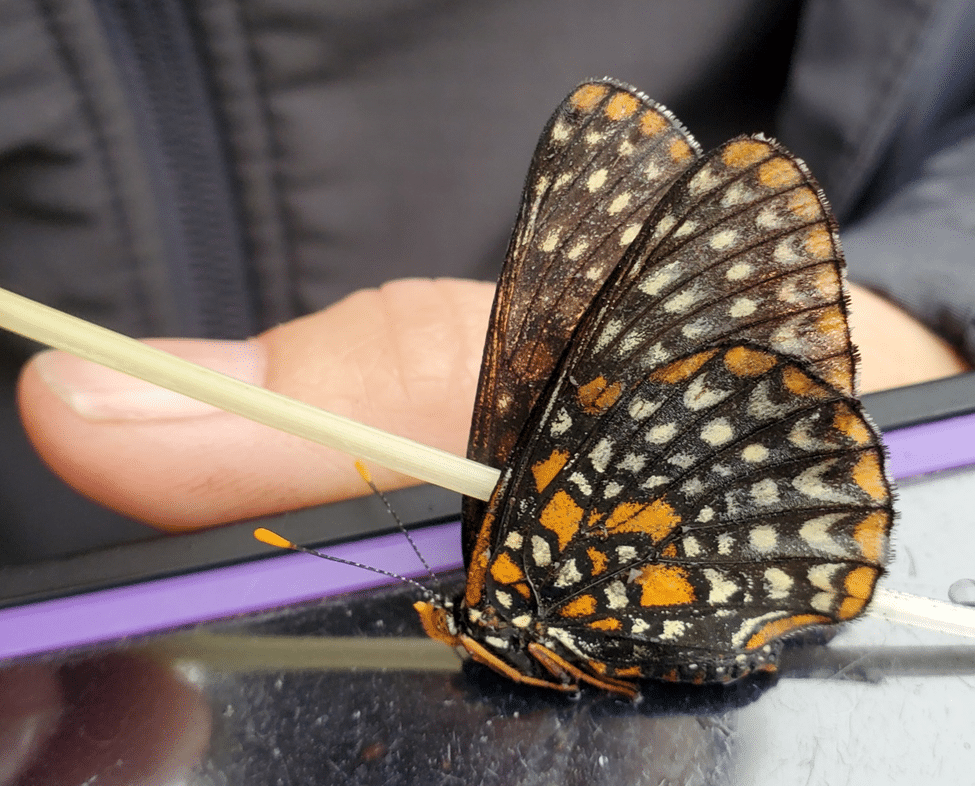
This butterfly is a Baltimore checkerspot, Euphydryas phaeton. It was found in the same area as the orchid above and is considered an indicator species of high-quality wetlands.

This tiny orchid, about 3 inches tall and nearly impossible to find if it is not blooming, is Spiranthes lucida, shining ladies’ tresses, a potentially threatened species in Ohio.
Observations from the Gardens
While working in the gardens at the Holden Arboretum, we see many interesting plants and animals too.
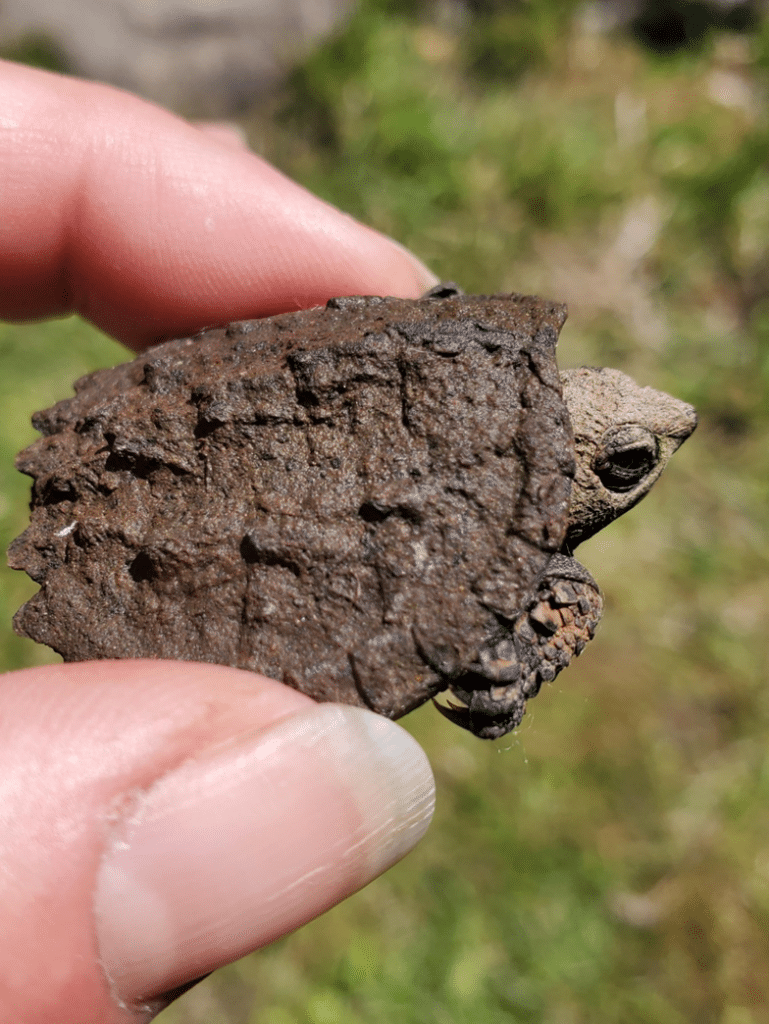
If you’ve been to Holden Arboretum recently, you may have seen one of our many turtles out of the pond looking for sites to dig a hole and bury their eggs. In the weeks following, predatory mammals often dig them up and feast. While it is easy to be sad about the destruction of so many turtle eggs, it is also important to realize that nature has its way of balancing and some do survive.
We often find baby turtles like this snapping turtle, Chelydra serpentina, I found as it was coming out of its first winter dormancy last month.
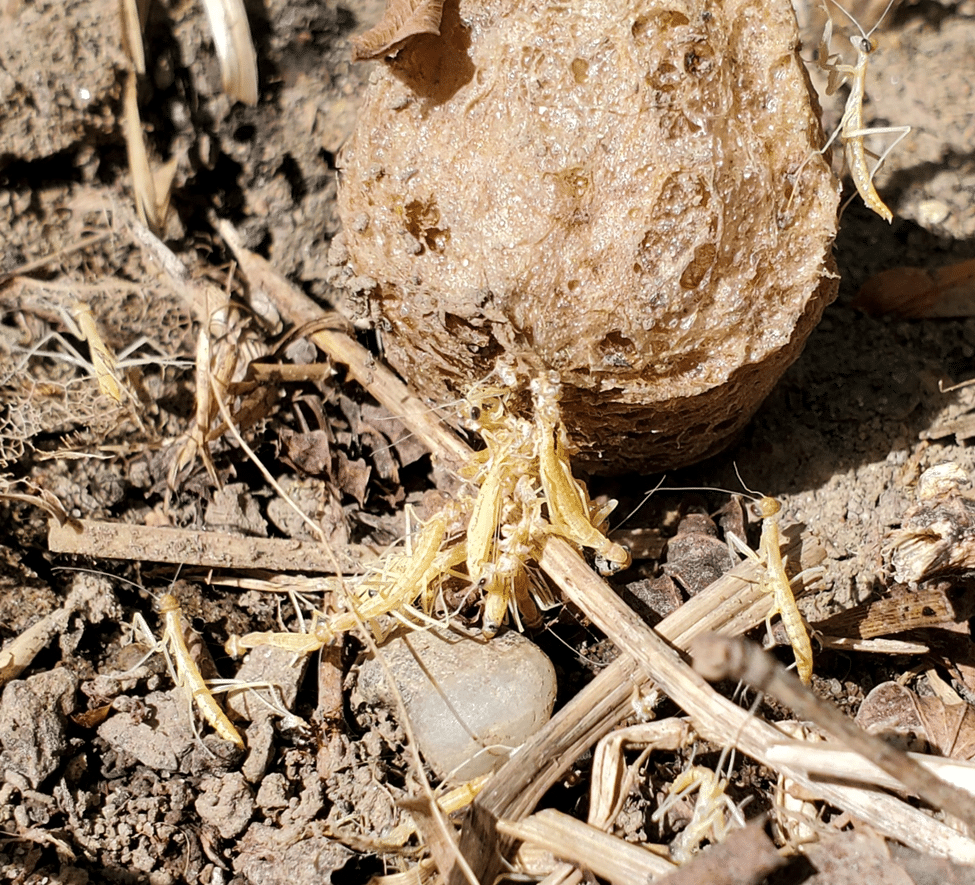
I happened to be in the right place at the right time to see this. A praying mantis egg mass, found in the arboretum gardens while pruning, was bursting to life with young hatchlings all in a rush to get out. I’m not pointing out the scientific name because there are three different genus types known in Ohio. While this is likely one of the exotic species, they aren’t necessarily considered invasive.

The potentially threatened, Ohio native wild lupine, Lupinus perennis, was blooming in the sand prairie recently. Requiring a very specific environment of sandy open soil, this plant is the exclusive food for the caterpillars of the endangered Karner blue butterfly, Lycaeides melissa samuelis.
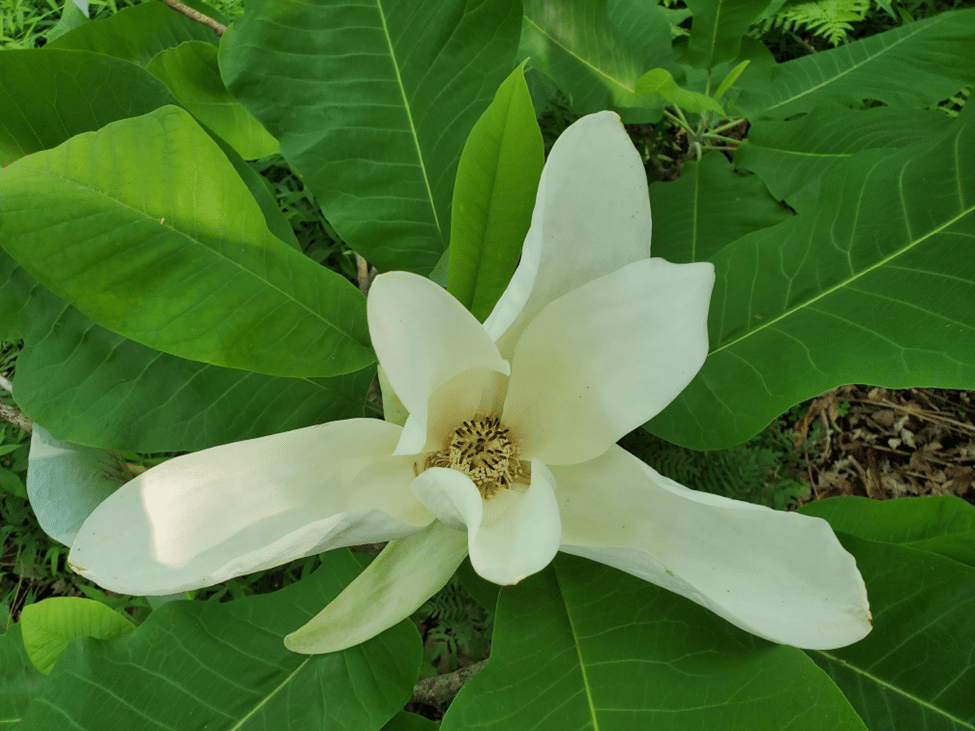
Magnolia macrophylla, appropriately known as bigleaf magnolia, has been blooming in the Wildflower Garden this month. This tree is known to have the largest simple (undivided) leaves of native North American tree species – up to 30 inches long – and the flowers are pretty big too! In the wild it is usually not hardy this far north, but it has been living in a protected spot in the Wildflower Garden for many years.
This is just a small selection of some of my recent favorite photos from Holden Forests & Gardens. Hopefully it encourages you to get out there, look around and take some of your own!
Here’s more to explore

August 4, 2026
Meet Our Summer Interns
Each summer, Holden Forests & Gardens welcomes talented interns who bring curiosity, passion, and fresh perspectives to our work. From conservation and forestry to horticulture and soil science, these students...
Read more
July 30, 2026
Meet Carlo Moreno, Holden’s Newest Scientist
In Akron, Ohio, a community garden called Akron Cooperative Farms sits on land that was once used as baseball fields. Many of the gardeners there are immigrants and refugees from...
Read more
June 11, 2026
It’s Poppin: June 11
It’s hot out there, but that won’t stop our plants from poppin’! The hot, dry weather we’ve had for the past couple of weeks means we are doing supplemental watering...
Read more
April 10, 2026
It’s Poppin’ April 10
Welcome to It’s Poppin’ 2026! Check in every week to discover the seasonal highlights in our living collections selected by curatorial staff at the Holden Arboretum and Cleveland Botanical Garden. We’ll...
Read more
February 11, 2026
Celebrating Women Scientists at Holden Forests & Gardens
On International Day of Women and Girls in Science, we’re taking a moment to appreciate the talented researchers advancing our understanding of forests, plants, and the ecosystems they support. From...
Read more
January 12, 2026
10 Questions with Jessica Hudson, HF&G’s New VP of Development
Q: What excites you most about working for Holden Forests & Gardens?A: My excitement surrounding Holden Forests & Gardens is immeasurable. I am eager to experience the year-long beauty of...
Read more
December 5, 2025
What’s Happening Below the Forest Floor? Lessons Learned from Decades of Soil Data
Caring for our planet includes an assurance that our natural ecosystems have a diversity of living things, clean water, thriving plants, and resiliency to disturbance. Soils are instrumental to all...
Read more
October 17, 2025
Meet Samantha Worthy, Holden’s Newest Scientist
The forests at the Holden Arboretum are a patchwork of ecosystems — a mosaic of beech, oak, and hemlock stands that shift from one to another in the space of...
Read more
July 30, 2025
Discover What Happens Behind the Scenes at Holden at the 10th Annual SEARCH Symposium
Curious about what goes on behind the scenes at Holden Forests & Gardens? The 10th annual Symposium for Ecological Research (SEARCH) offers a window into the real work happening across...
Read more