
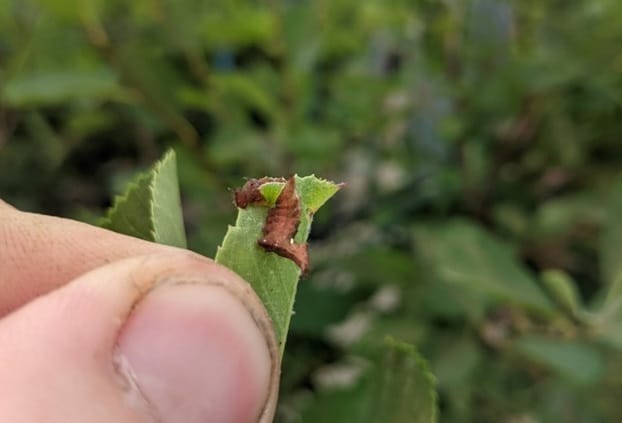
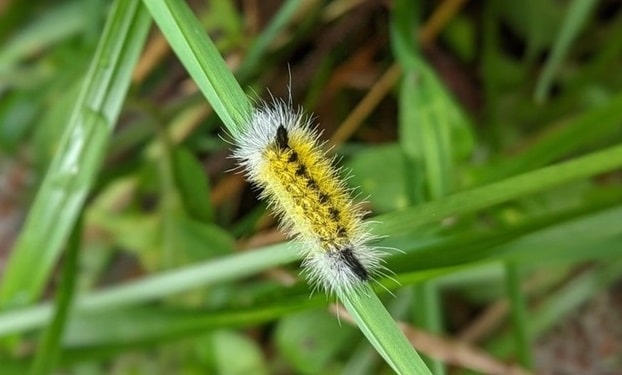
The nursery at the Holden Arboretum takes care of a great number of species. One polyhouse alone currently contains between 300 and 400 species and cultivars. Among all these plants, a great many are native to Ohio, and the rest often offer benefits to butterflies and moths, such as nectar. During the growing season, I try to keep track of the pollinators and other insects that flit in and out of the polyhouses, container area, and lath house. Listed below is a sampling of caterpillars found here in 2022. I selected these six caterpillars in particular as they highlight some of the ways that caterpillars defend themselves from predators, and are less commonly-known than, say, the monarch caterpillar.



Here’s more to explore

July 18, 2023
Butterfly Garden Bed Renovation
Pollinator gardening has become a popular hobby for many people. Where pollinator gardens are both beautiful and beneficial it doesn’t take long for things to get out of control. Plants...
Read more
March 27, 2023
Behind the Scenes with Cleveland Botanical Garden’s Butterflies
By Matt Edwards, Animal Care Specialist It’s that time of year, the Return of the Butterflies. Have you ever wondered where Cleveland Botanical Garden’s biome butterflies come from, how they...
Read more
May 17, 2022
Blue false indigo & Clouded Sulphur
Blue false indigo (Baptisia australis) is a flowering plant in the pea family (Fabaceae). This plant grows upright and makes an excellent border plant for your pollinator garden. It’s deep blue...
Read more
May 17, 2022
Prairie ironweed & American Lady
Prairie ironweed (Vernonia fasciculata) is a staple meadow plant, growing tall and blooming in late summer and fall. It is self-seeding as seeds fall to the ground at the end of...
Read more
May 17, 2022
Dog violet & Orange Fritillary
Dog violet (Viola labradorica) is a low-growing perennial that blooms with vibrant purple flowers in the spring. If it weren’t for these showy flowers, many would likely walk right by this...
Read more
May 17, 2022
Yellow false indigo & Wild Duskywing
Yellow false indigo (Baptisia sphaerocarpa) is a beautiful addition to any flower garden. During the summer, yellow, upright flowers bloom and attract a variety of insects – the “good kind” of...
Read more
May 17, 2022
Sweetbay Magnolia & Eastern Tiger Swallowtail
Sweetbay magnolia (Magnolia virginiana) is an elegant, small magnolia. It’s creamy white flowers bloom in late spring here in Northern Ohio and put on a show that delights your senses of...
Read more
May 17, 2022
Shumard oak & Banded Hairstreak
Shumard oak (Quercus shumardii) is a large tree that grows well in both urban and natural settings. Like most oaks, Shumard oak has deeply lobed, characteristic “oak” leaves and produces acorns...
Read more
May 17, 2022
New England aster & Pearl Crescent
New England aster (Symphyotrichum novae-angliae) is a large, summer-blooming perennial. It’s characteristic aster flowerheads sport vibrant purple petals, with bright yellow flower centers. You’ll often see bees and butterflies of all...
Read more